

Dark
119 days to 100 miles

With a little variance to allow for differences between civil and nautical twilights, and sunrise and sunset, there are going to be almost eight hours of darkness on the night of 13th to 14th June this year.
Depending on my speed, it’s likely that a third of my South Downs Way 100 run (the back third, after fifteen hours on my feet) is going to be lit by headtorch only.
Hopefully I’ll have company for this section of the race, but anything could happen so I’ve got to accept that I could be solo.
There’s just the slightest sliver of moon that night. I doubt the lights of Brighton, way off to the south of the course are going to offer much illumination.
This part of my training plan is all about working on my weaknesses. Running in the dark is one of those.
I run at night often - winter mornings before dawn, or evenings coming back from the track - but I’ve hardly ever run in the dark.
Living in a city, with street-lights everywhere, there is always light to be found. The start of the Peak Divide Oner, where we climbed out of Sheffield up into the Peak District before the sun came up, is one of the only dark running moments I can think of. It felt safe because I was with a large group of other runners, LED trails bouncing up the hillside.
I’m not yet confident to run solo, in the dark, on trails (though I’m going to have to at some point), so I’m easing into dark runs with short runs in Southampton Common. There are two lit paths that cross the Common, helpful for those traversing it, but the perimeter paths are unlit.
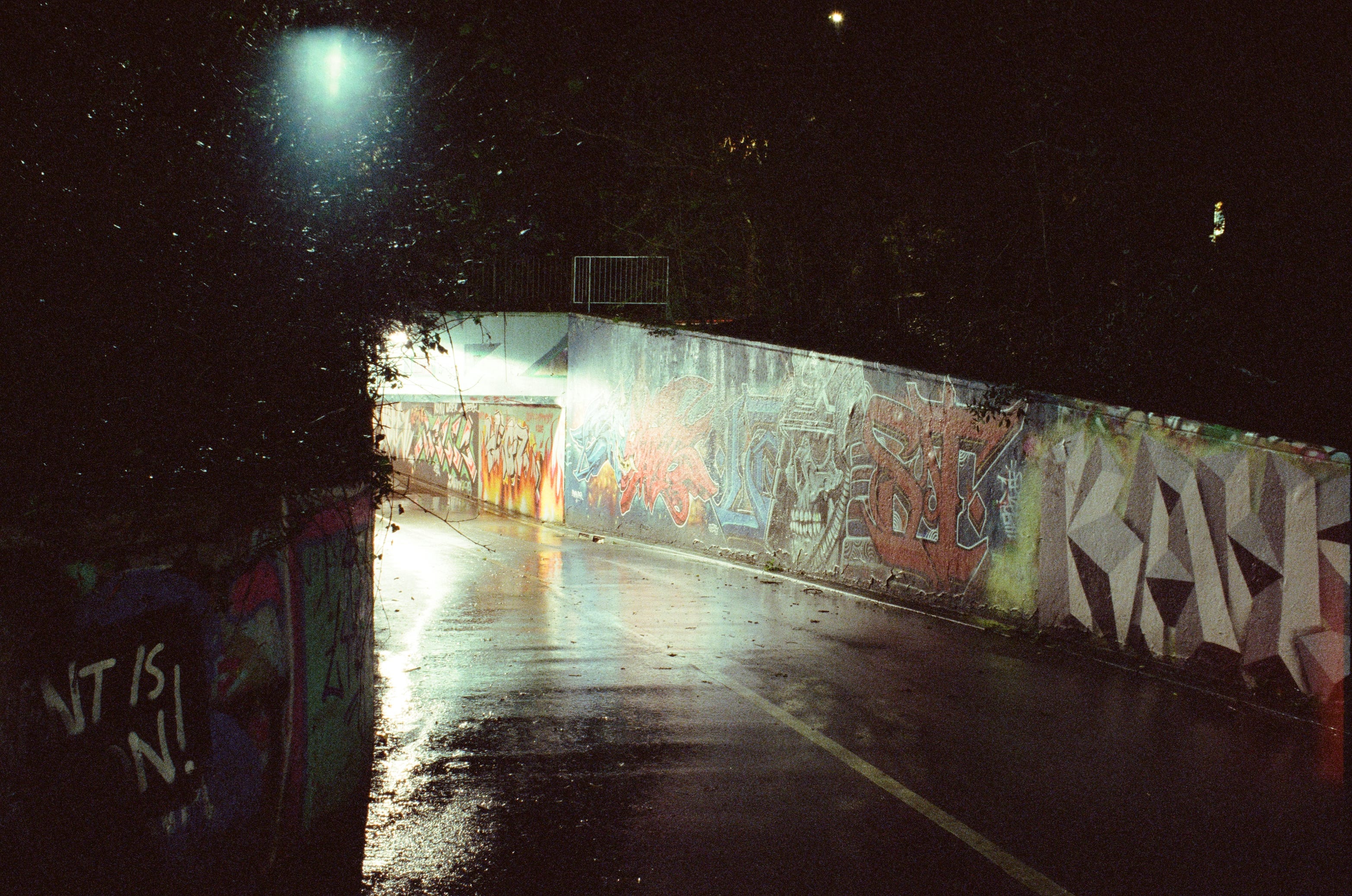
I’ve now been for three dark runs, doing perimeter loops until I get bored, spooked, or too wet (this feels like one of the soggiest months of running I’ve ever known). I’ve got a good head torch which gives more than enough light to see where I’m going, but I still feel uneasy.
Last year a man was killed in the Common, but I tell myself that most victims know their murderers and I’m not in the same risk category as the late Ernest Deputat, who was living in the Common, off-grid.
I’m running when there are plenty of other people around - commuters, dog walkers, runners - and not in the middle of the night, so that’s OK, right?
Despite the dark, everyone is visible. Head-, handheld-, or phone-torches. Reflective details on jackets. Dogs with disco collars. All except for the man I passed, lapping in the opposite direction, who was confidently, quickly, striding through the darkest part of the Common (near the Old Cemetery!), head-to-toe in black, with no light. He didn’t make me jump, because I could see him from some way off (thank you Petzl), but how was he doing it? How could he see where he was going? How was he not scared?
Dark mornings feel more welcoming than dark evenings. There’s something about the end of the day that feels like a decline. The creatures of the day retreat to bed and safety, and those of the night come out to play. In the morning, no matter how dark the night has been, there is always the prospect of the coming hopeful dawn light. Black gives way to blue, pink, or grey (mostly grey, currently). My mood lifts with it.
Gradually, with each dark run, I’m finding things to enjoy. So far it’s just owl calls and the surprising brightness of lichen in torchlight, but I know there’ll be more to come.
Training update: up to 60 mi this week, and still building. Tired track session on Tuesday. 21 mi long run on Thursday was pleasantly OK. Feet ache. Sleepy.
This is volume one, issue twenty-two of ¡Venga!, a running journal by Jonathan S. Bean.
Volume one: ‘326 days to 100 miles,’ documents Jonathan’s preparation for, and participation in the South Downs Way 100 mile race on 13 June 2026. The journal is published on Substack and as a paper newsletter sent by post.
Subscribe to receive the print edition of each newsletter, posted to your door, for £5 a month.
(or subscribe for free to receive new posts by email)
Want to read more about this phase of my training plan…?
Nils Svensson

At the Beijing Winter Olympics, in February 2022, a Swedish speed skater called Nils van der Poel won the men’s 5000m and 10000m races. He broke the Olympic record in the 5000 and set a new world record in the 10000. In that same 2021-22 season he won the World Allround Championships (500, 1500, 5000 and 10000 over two days of racing), to go with his 50…
I often think about a time when Richard Askwith said - maybe it was even on our retreat - that he doesn't like wearing a head torch, because it means he "can't see". One day I want to ask him more about that, because I think I sort of understand, but definitely sort of don't. Does it depend on what you want to see? Without the headtorch, you can see the moon, the stars, the colour of dark. But maybe, like your man in the common, some people really did eat all their carrots as a child.