

Nils Svensson
145 days to 100 miles

At the Beijing Winter Olympics, in February 2022, a Swedish speed skater called Nils van der Poel won the men’s 5000m and 10000m races. He broke the Olympic record in the 5000 and set a new world record in the 10000. In that same 2021-22 season he won the World Allround Championships (500, 1500, 5000 and 10000 over two days of racing), to go with his 5000 and 10000 World Single Distances golds from the previous year.
Just a month after the Beijing games, as a world record holder who had won everything there was to win, he retired from speed skating at the age of 25.
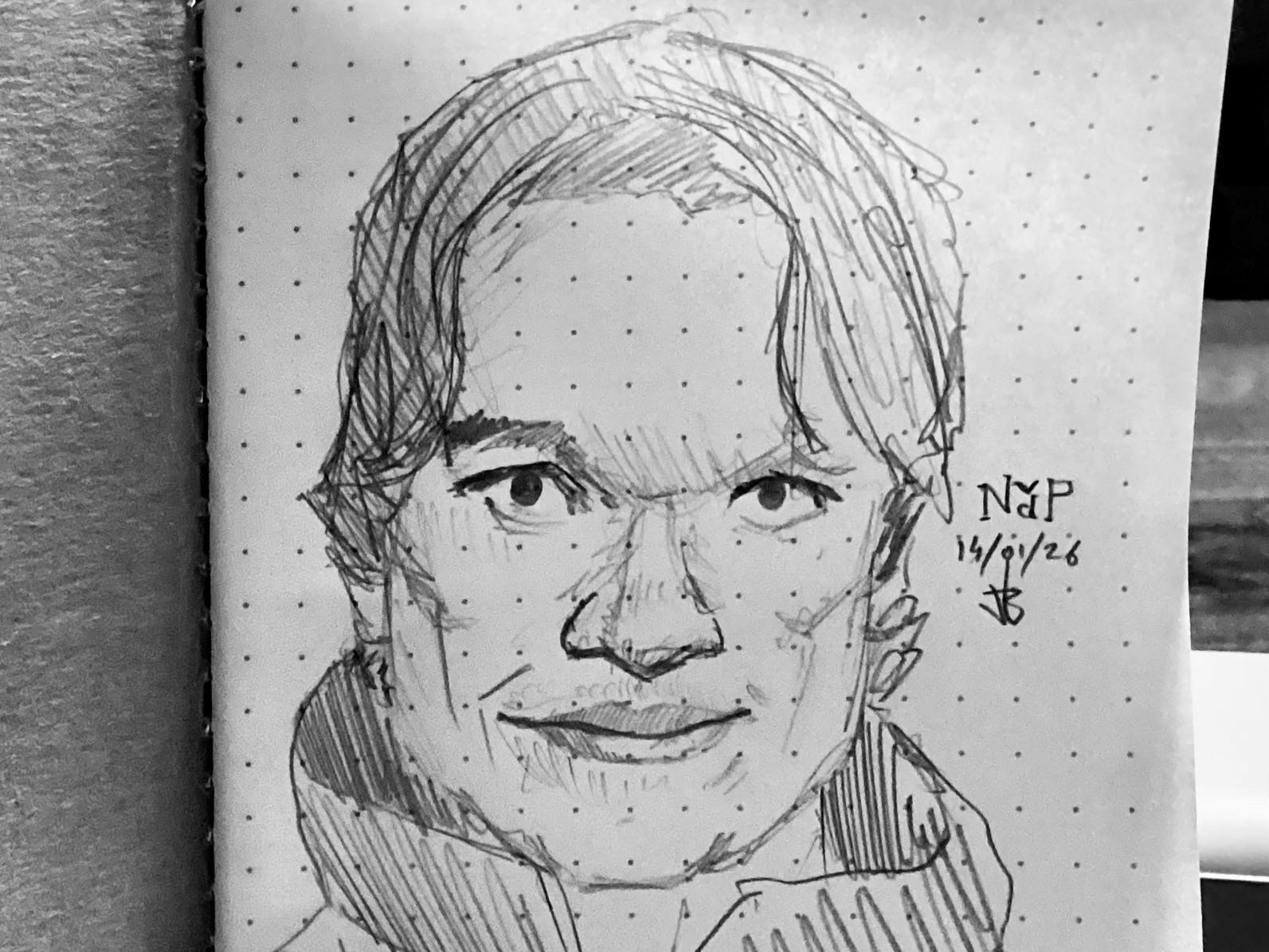
And then, with the sport still trying to understand his sudden, early retirement, he published his 62 page training manifesto, How to Skate a 10K.
[In November 2024, Nils changed his surname from Van der Poel, to his mother’s maiden name, Svensson. Hence the title above, and my use of Svensson, from this point on.]
He won everything, retired, and then freely gave away his full training diary, and the rationale behind it, to explain how he got so fast. This was a ballsy, unexpected move, not least because the training revealed just how radically he had departed from the prevailing wisdom. The choice of opening quote is telling:
“It seems that all true things must change and only that which changes remains true.”
- Carl Jung
In the world of speed skating, Svensson was an iconoclast, ignoring conventional advice, dropping established exercises he considered ineffective, and mostly training alone, according to the principles he believed to be true.
The specifics of Svensson’s training are of limited direct use to ultrarunners, but the general principles are helpful and I have incorporated them into my own plan.
Consider the event demands
Svensson needed to be able to skate at world record pace, and have the endurance to hold it for 10000m. His training reflected that, with a massive amount of aerobic work leading into a threshold block, then race-pace iceskating.
To run 100 miles, I need to be able to run efficiently for a very long time. Aerobic endurance is needed, as is the conditioning to endure the physical battering of so much repetitive impact. This is what my training should address.
Singlemindedness
Occasionally, Svensson would need to deviate from his plan (no athlete exists in isolation), but most of the time he held his course and ignored outside distractions.
The South Downs Way 100 is going to be a massive challenge for me, and I don’t want my preparation to be negatively affected by unnecessary distractions. Other than the SDW50 (a recce) and the Vets League (fun), I’m not going to risk injury by racing when I don’t need to.
Balance
Svensson’s 5-2 approach is unusual among full time athletes. From Monday to Friday, he trained as much as he could manage, then took Saturday and Sunday off. There are two benefits:
Longer recoveries allow for harder training.
Two days of living like a normal person, and spending time with loved ones, made it easier to commit to the hard trudge of training.
This makes a lot of sense to me and with this in mind I have only run on weekends a few times since July. Running, like work, is a stressor, and will only become more so as my training progresses. I’d rather keep all my stress during the working week and leave two full, clear days to enjoy.
When training gets hard, it’s important to find a way to enjoy it. I fully endorse this quote from Svensson:
“Sometimes, to get through [the training], what was needed was an ice cream and sometimes it was multiple ice creams.”
Simplicity
If skating is “a one legged squat, repeated,” running is just one step after another. Svensson sought to keep his programme simple and robust, and I’m trying to do the same. The SDW100 is a big leap into the unknown for me, and the fewer complications there are, the more I can control.
That’s the plan, at least.
To download Svensson’s document for free, visit howtoskate.se/
This is volume one, issue nineteen of ¡Venga!, a running journal by Jonathan S. Bean.
Volume one: ‘326 days to 100 miles,’ documents Jonathan’s preparation for, and participation in the South Downs Way 100 mile race on 13 June 2026. The journal is published on Substack and as a paper newsletter sent by post.
Subscribe to receive the print edition of each newsletter, posted to your door, for £5 a month.
(or subscribe for free to receive new posts by email)
For more on balancing goals with a happy life (in another article with a hand drawn image), read this:
Disagreeing with Bukowski

There’s a bar on the corner of Oosterpark and Beukenweg in Amsterdam’s Oud-Oost district, called Bar Bukowski. I’m hesitant to refer to the average height of the Dutch population, as it feels clichéd to do so, but when Heather and I visited, Bar Bukowski was packed with the tallest after-work drinks clientele we’d ever seen. I’m remarking on it, because…
Enjoyed this, mate. Found your page the other day. I’m also planning a hundred in September, except I’m starting from more or less zero. Months of next to know running at all. But hey, if women can grow babies in nine months, surely I can run a hundred miles, right?